New to blackjack? This beginner blackjack guide with basic strategy breaks down exactly how to play, when to hit, and how to avoid costly rookie mistakes.

How to Play Blackjack and Win for Beginners (What the Table Doesn’t Tell You)

In 2019, a 26-year-old accountant from Lagos named Emeka sat down at a blackjack table in Sun City, South Africa, with R2,000 in chips and zero strategy. He lost it in under 40 minutes. Two years later, after studying a beginner blackjack guide with basic strategy, he returned with R1,500 and walked away with R4,800. Same game. Different approach. The difference wasn’t luck — it was decision-making.
These questions matter because most blackjack beginners lose not from bad luck but from bad decisions that basic math already solved decades ago. Here’s what Emeka learned, and what you need to know before you sit down at any table — online or physical.
What does the house edge actually mean at a blackjack table?
Blackjack has one of the lowest house edges of any casino game. With correct basic strategy, that edge drops to roughly 0.5% — meaning for every R100 wagered, the casino expects to keep about 50 cents long-term. Compare that to slots, which typically run a 4–8% house edge, and the math speaks for itself.
But here’s what most beginners miss: that 0.5% figure only applies when you play correctly. According to research cited by the UNLV Center for Gaming Research, the average recreational player gives the casino a 2–4% edge simply through suboptimal decisions — things like hitting a 17, not splitting aces, or taking insurance. Emeka’s first visit to Sun City? He was probably operating at a 3% disadvantage without knowing it.
The house edge is not fixed. You influence it with every decision you make at the table. That’s the part nobody tells you at the casino cage.
KEY STAT
Basic strategy reduces blackjack’s house edge to as low as 0.5%
Without it, recreational players typically hand the casino 2–4x more than necessary — a gap that destroys bankrolls faster than bad luck ever could.
What is basic strategy and why does every beginner need it before touching a chip?
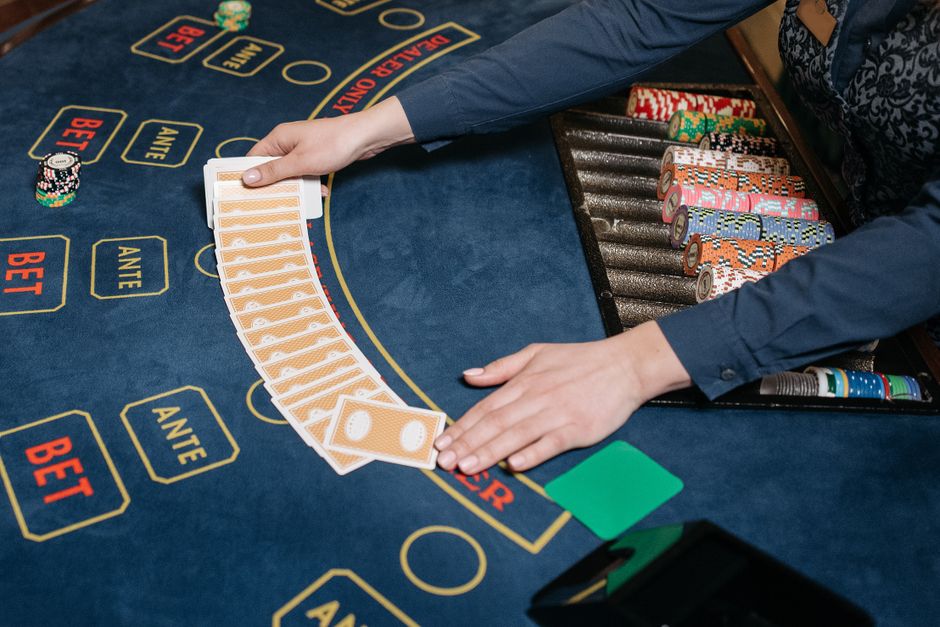
Basic strategy is a mathematically proven set of decisions — when to hit, stand, double down, or split — based on your hand total and the dealer’s visible card. It’s not a theory. It’s not a system sold by someone on YouTube. It was derived through statistical analysis of millions of hand combinations, first formalized by Roger Baldwin and colleagues in a 1956 paper published in the Journal of the American Statistical Association.
Here’s what a simplified basic strategy chart tells you for hard hands:
- Hard 8 or less: Always hit.
- Hard 9: Double down if dealer shows 3–6, otherwise hit.
- Hard 10 or 11: Double down against most dealer cards (except an ace or 10).
- Hard 12–16: Stand if dealer shows 2–6 (dealer bust range); hit against 7 or higher.
- Hard 17 and above: Always stand. No exceptions.
- Soft 17 (Ace + 6): Double if allowed, otherwise hit — never stand here.
- Pair of Aces or 8s: Always split.
- Pair of 10s: Never split. You already have 20.
This is the foundation of any beginner blackjack guide with basic strategy. Emeka printed a laminated card, practiced at home using a free app for two weeks before going back to Sun City. Most South African and Nigerian casinos allow you to reference a strategy card at the table — they know it doesn’t overcome the house edge, they just reduce it.
The beginner blackjack guide with basic strategy question nobody asks: which table rules actually matter?
How rule variations affect your blackjack odds
Not all blackjack tables are equal. The rules printed on the felt — or buried in the game settings online — can swing the house edge by more than 1% on their own.
The single most important rule variation is blackjack payout. Traditional tables pay 3:2 on a natural blackjack. Many newer tables — especially in African Online Casinos and tourist-facing floors — pay 6:5. That one change adds roughly 1.4% to the house edge. If you see 6:5 on the sign, walk away. Honestly, I’d rather play a worse game with better rules than a premium table offering 6:5.
Other rules that matter:
- Dealer hits soft 17 (H17): Adds 0.2% to house edge vs. dealer standing on soft 17.
- Double after split allowed: Reduces house edge by 0.14%.
- Surrender option: Late surrender reduces the edge by about 0.07%.
- Number of decks: Single deck is best for players, but casinos compensate with worse rules. Six or eight decks with good rules often beats single deck with bad ones.
According to Michael Shackleford, Gaming Mathematician at WizardOfOdds.com, “The single biggest mistake beginners make is choosing a table based on minimum bet rather than rule set. A R50 table with bad rules costs more long-term than a R100 table with player-friendly conditions.”
When should a beginner actually double down or split — and when does it kill your stack?
Doubling down and splitting: the moves that actually shift your expected value
Doubling down means you double your bet in exchange for receiving exactly one more card. Splitting means you separate a pair into two hands, each with its own bet. Both moves exist to let players extract maximum value when the math is in their favor. Most beginners either never use them or use them on gut feel — both approaches bleed money.
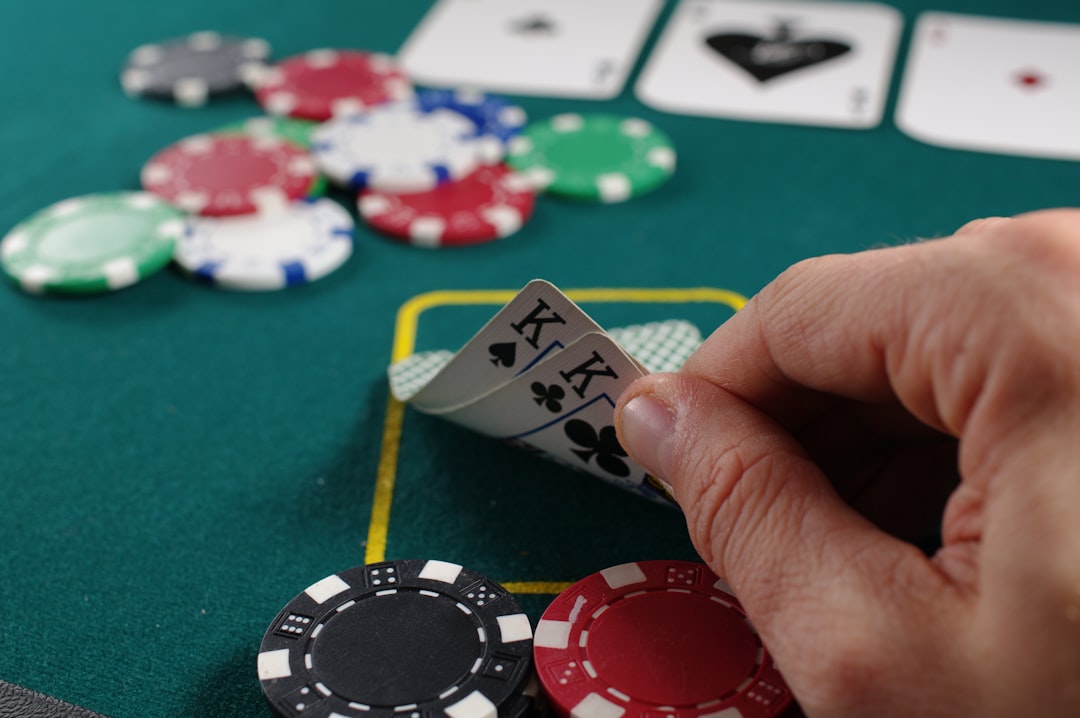
Emeka’s biggest single win in his second Sun City visit came from correctly doubling down on a hard 11 against a dealer’s 6. He put another R300 on the table, drew a king, and the dealer busted. That R600 pot came from a textbook play, not a hunch. The dealer’s 6 is the weakest card in the deck — they must keep hitting until 17, and with a 6 showing, the bust probability sits around 42%.
Never split 10s. Ever. You have a 20. You’re almost certainly winning. Splitting turns a near-guaranteed win into two uncertain hands because you got greedy for more chips. It’s the move that separates impulsive players from disciplined ones. Always split aces and 8s, regardless of what the dealer shows — the math is clear on both.
Bankroll management — the part of blackjack beginners always skip until it’s too late
Setting bet sizes and loss limits that keep you at the table longer
Here’s the harsh truth: even perfect basic strategy doesn’t guarantee short-term wins. Variance is real. You can play flawlessly for an hour and still lose six hands in a row — that’s just probability doing its job.
The standard recommendation among professional gamblers is to bring at least 20x your minimum bet as a session bankroll. Sitting down with R1,000 at a R50 minimum table gives you a reasonable buffer to absorb variance without going bust before the math can work in your favor. Emeka now uses a simple rule: if he loses 40% of his session bankroll, he stops. That’s not weakness — that’s discipline.
Set a win target too. Walking away when you’re up 50–75% of your starting stack sounds counterintuitive, but it’s what separates players who occasionally win from players who always give it back. When you think about Casino Withdrawal timing, the same logic applies — locking in winnings before variance erodes them is a skill, not a retreat.
One more number: Data from the American Gaming Association shows that blackjack accounts for approximately 31% of all table game revenue in regulated casinos — meaning players collectively lose more at blackjack than any other table game despite it having the best odds. The game isn’t the problem. Bankroll management is.
Online blackjack vs. live table blackjack — does the strategy change?
Basic strategy doesn’t change. The math is identical whether you’re playing on a screen in Accra or at a felt table in Johannesburg. What changes is the pace and the environment.
Online blackjack runs fast — sometimes 200+ hands per hour versus 60–80 at a live table. That speed amplifies everything: good decisions win faster, but mistakes compound faster too. For pure strategy practice, online RNG blackjack is valuable precisely because of the volume. You’ll see more hands in an hour online than in an entire evening at a physical casino.
Live dealer online blackjack, now widely available across African markets through platforms serving players in Nigeria, Kenya, and Ghana, runs closer to real-table pace. It’s the best of both — the convenience of online play with the social verification of watching a real dealer handle real cards. If you’re a beginner building confidence, start with online RNG, drill the strategy, then move to live dealer before stepping into a physical casino.
The single most important point: Everything in this guide — the edge calculations, the doubling rules, the bankroll limits — becomes useless without basic strategy as your foundation. Emeka didn’t win because he got lucky on his second visit to Sun City. He won because he finally stopped making decisions based on instinct and started making them based on math. That’s the entire game, compressed into one sentence. Most people still think blackjack is about card intuition. It isn’t. It’s applied probability — and the chart already has the answers.



New Casinos

Betway is the leading international sports betting and casino operator across Africa, backed by NYSE-listed Super Group and licensed in every market it serves. With coverage spanning 30+ sports, a full casino powered by Evolution and Pragmatic Play, industry-leading esports betting.

Premierbet is one of the most established betting operators across Francophone and Anglophone Africa, active in Cameroon, Senegal, Ivory Coast, Togo, Benin, and several other markets. With competitive football odds, a popular accumulator bonus, jackpot competitions, virtual sports, and full mobile money integration.

Bwinners is a sports betting platform designed specifically for African players, active across Senegal, Gambia, Sierra Leone, Guinée-Bissau, Zimbabwe, and Lesotho. Built mobile-first with local mobile money integration — Orange Money, Wave, and EcoCash